




In addition to Weibo, there is also WeChat
Please pay attention
WeChat public account
Shulou



2026-03-15 Update From: SLTechnology News&Howtos shulou NAV: SLTechnology News&Howtos > Servers >
Share
Shulou(Shulou.com)06/01 Report--
This article shows you how to use awk commands in shell to monitor network card traffic in real time. The content is concise and easy to understand, which can definitely brighten your eyes. I hope you can get something through the detailed introduction of this article.
The principle of implementation:
[chengmo@localhost ~] $cat / proc/net/dev
Inter- | Receive | Transmit
Face | bytes packets errs drop fifo frame compressed multicast | bytes packets errs drop fifo colls carrier compressed
Lo:1068205690 1288942839 0 0 0 1068205690 1288942839 0 0 0
Eth0:91581844 334143895 0 0 0 145541676 4205113078 3435231517 0 0 0
The proc/net/dev file stores the total traffic information of the network card and adds up the incoming and outgoing records at intervals. You get the actual rate before subtracting it.
Program code:
The code is as follows:
Awk 'BEGIN {
OFMT= ".3f"
Devf= "/ proc/net/dev"
While (("cat" devf) | getline)
{
If ($0 ~ /: / & & ($1080) > 0)
{
Split ($1dytarr, ":")
Net [tarr [1]] = $10+tarr [2]
Print tarr [1], $10+tarr [2]
}
}
Close (devf)
While ((system ("sleep 1")) > = 0)
{
System ("clear")
While (getline
< devf ) { if($0 ~ /:/ && ($10+0) >0)
{
Split ($1dytarr, ":")
If (tarr [1] in net)
{
Print tarr [1], ":", ($10+tarr [2]-net [tarr [1]]) * 8Maple 1024, "kb/s"
Net [tarr [1]] = $10+tarr [2]
}
}
}
Close (devf)
}
}'
Note: the first while is to get the total initial value, $1 is the network card outbound traffic, $10 is the network card inbound traffic. The second while starts at intervals of 1 second. The average flow per second is obtained by calculating the total flow difference.
Note: reading the file line by line through getline requires close to close. Otherwise, the data cannot be obtained in the second while loop.
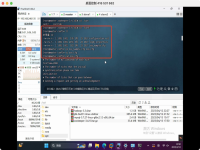
Running result:
The above is how to use awk commands in shell to monitor network card traffic in real time. Have you learned any knowledge or skills? If you want to learn more skills or enrich your knowledge reserve, you are welcome to follow the industry information channel.
Welcome to subscribe "Shulou Technology Information " to get latest news, interesting things and hot topics in the IT industry, and controls the hottest and latest Internet news, technology news and IT industry trends.
Views: 0
*The comments in the above article only represent the author's personal views and do not represent the views and positions of this website. If you have more insights, please feel free to contribute and share.

The market share of Chrome browser on the desktop has exceeded 70%, and users are complaining about

The world's first 2nm mobile chip: Samsung Exynos 2600 is ready for mass production.According to a r


A US federal judge has ruled that Google can keep its Chrome browser, but it will be prohibited from
Continue with the installation of the previous hadoop.First, install zookooper1. Decompress zookoope





About us Contact us Product review car news thenatureplanet
More Form oMedia: AutoTimes. Bestcoffee. SL News. Jarebook. Coffee Hunters. Sundaily. Modezone. NNB. Coffee. Game News. FrontStreet. GGAMEN
© 2024 shulou.com SLNews company. All rights reserved.
 12
12
 Report